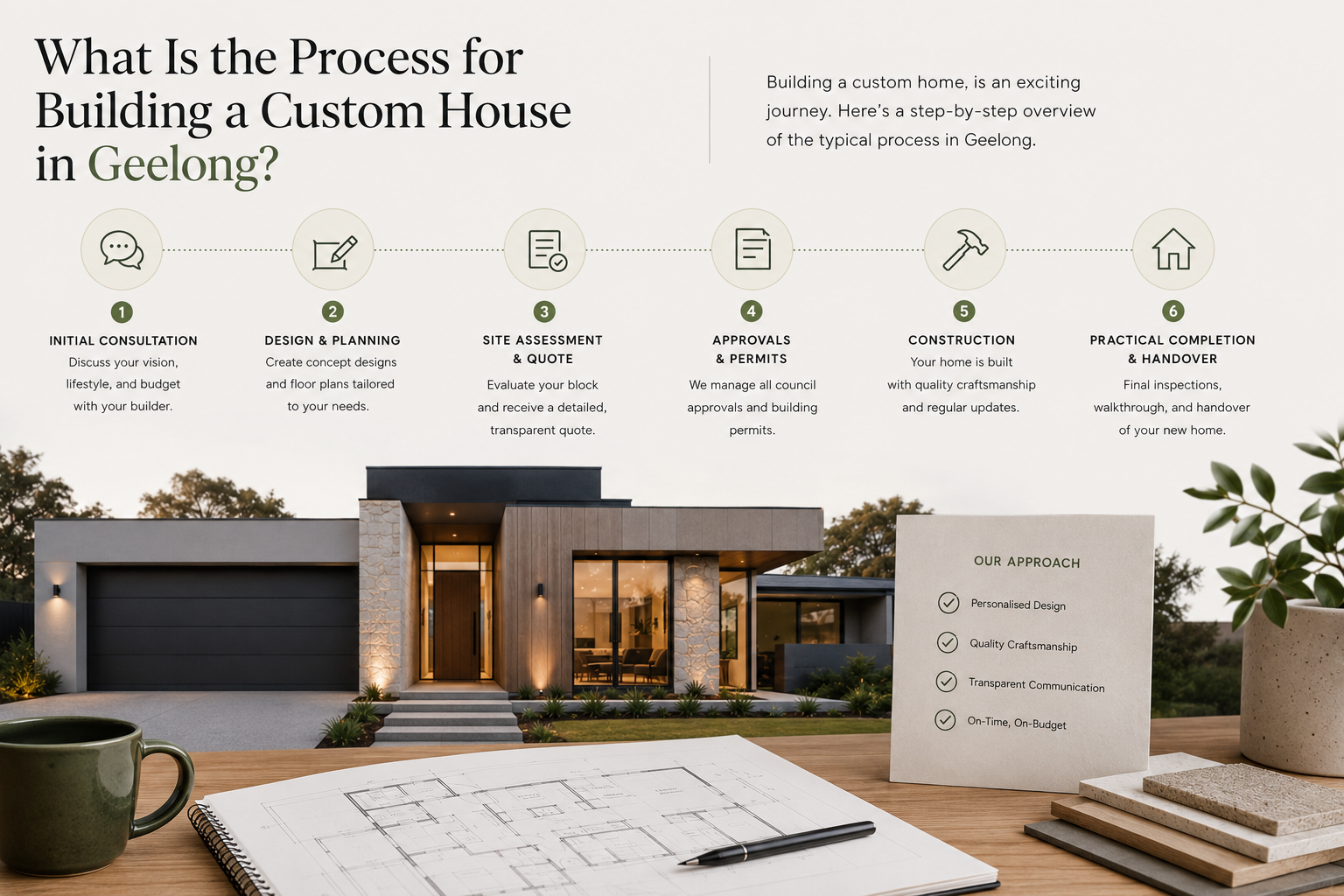
Building a custom house is exciting but for many homeowners in Geelong, it can also feel overwhelming at the beginning.
There are:
builders,
architects,
permits,
contracts,
consultants,
site costs,
engineering requirements,
and dozens of decisions that most people have never dealt with before.
That’s why one of the most common questions people ask is:
“What actually happens during the custom home building process?”
Because unlike buying an existing property, building a custom home involves many stages happening over several months — sometimes longer depending on complexity.
And while every project is different, most successful custom builds in Geelong follow a similar overall process.
This guide breaks down each stage step-by-step, including:
planning,
design,
approvals,
construction,
budgeting,
and what homeowners should realistically expect in 2026.
Why More People in Geelong Are Choosing Custom Homes?
Before understanding the process itself, it helps to understand why custom building has become so popular across Geelong.
More homeowners now want:
personalised layouts,
energy-efficient design,
flexible living spaces,
better natural light,
and homes designed around lifestyle instead of standard templates.
At the same time, many blocks in Geelong involve:
slopes,
coastal conditions,
narrow frontages,
or irregular dimensions
that don’t always suit standard project-home floor plans.
Custom homes allow people to create something specifically suited to:
their land,
their priorities,
and their long-term plans.
Stage 1: Defining Your Vision and Budget
The process usually begins long before meeting a builder.
At this stage, homeowners start thinking about:
lifestyle needs,
family requirements,
future plans,
preferred suburbs,
and realistic budgets.
This is also when people begin collecting inspiration from:
display homes,
architecture websites,
social media,
and local custom projects.
One mistake many people make early is focusing only on aesthetics without thinking enough about:
functionality,
long-term living,
maintenance,
or realistic construction costs.
Good planning at the beginning often prevents expensive changes later.
Stage 2: Finding Land or Evaluating Your Existing Site
Some homeowners already own land before starting the design process.
Others search for land simultaneously while researching builders and designers.
In Geelong, site conditions can significantly affect:
construction costs,
engineering requirements,
drainage,
orientation,
and overall design flexibility.
Factors builders usually assess include:
slope,
soil quality,
block dimensions,
access,
council overlays,
and surrounding environment.
A beautiful design may need major adjustments if the land creates construction challenges.
That’s why experienced builders often prefer evaluating the site early before finalising concepts.
Stage 3: Choosing the Right Building Approach
One thing many homeowners don’t realise initially is that there are several ways to structure a custom home project.
Some people:
hire an architect first,
then tender to builders later.
Others choose:
custom builders,
or integrated design-and-build firms that handle everything under one structure.
Each option changes:
communication flow,
pricing structure,
design flexibility,
and project management responsibilities.
There’s no universal “best” approach.
The right structure depends on:
project complexity,
budget,
desired involvement level,
and design expectations.
Stage 4: Concept Design and Planning
Once the builder or designer is selected, the design phase begins.
This stage focuses on:
floor plans,
room layout,
orientation,
lifestyle functionality,
and visual concepts.
Modern custom homes in Geelong increasingly prioritise:
open-plan living,
indoor-outdoor flow,
energy efficiency,
natural light,
and flexible spaces.
Good designers think carefully about how people will actually live inside the home daily — not just how it looks in renders.
This stage usually involves several revisions before final concepts are approved.
Stage 5: Budget Review and Preliminary Pricing
One of the most important parts of the process happens before final documentation.
Preliminary pricing helps determine whether:
the design aligns with the budget,
adjustments are required,
or certain selections need reconsideration.
This stage is critical because custom homes can easily exceed expectations if costs are not monitored early.
Experienced builders usually discuss:
allowances,
site costs,
engineering factors,
and possible variations honestly before contracts are signed.
Transparent budgeting early creates smoother projects later.
Stage 6: Detailed Drawings and Documentation
After concept approval, the project moves into detailed documentation.
This includes:
architectural drawings,
engineering plans,
energy assessments,
material specifications,
and permit documentation.
These documents guide:
pricing,
approvals,
and eventual construction.
The more detailed and organised this stage is, the fewer misunderstandings typically occur during building.
Stage 7: Permits and Approvals
Before construction begins, several approvals are usually required.
Depending on the project, this may involve:
planning permits,
building permits,
engineering approvals,
energy compliance,
and council requirements.
Approval timelines vary depending on:
location,
design complexity,
overlays,
and local council processes.
In Geelong, permit stages can sometimes take longer than homeowners initially expect.
Experienced builders usually help guide clients through this process.
Stage 8: Signing the Building Contract
Once pricing and documentation are finalised, the building contract is prepared.
This should clearly explain:
inclusions,
exclusions,
allowances,
timelines,
payment schedules,
warranties,
and variation procedures.
One mistake homeowners make is rushing through contracts without fully understanding:
provisional sums,
allowances,
or variation clauses.
Reliable builders encourage questions and transparency before signing.
Stage 9: Site Preparation and Construction Begins
Construction officially begins once:
permits are approved,
contracts are signed,
and site preparation is complete.
Early construction stages often include:
excavation,
slab preparation,
drainage,
and structural foundations.
From there, the project progresses through:
framing,
roofing,
external cladding,
rough-ins,
plastering,
cabinetry,
finishes,
and final detailing.
At this point, homeowners usually begin seeing the design physically come to life.
Stage 10: Managing Variations and Unexpected Challenges
Almost every custom home project encounters some unexpected changes.
These may involve:
weather delays,
material availability,
site discoveries,
client design adjustments,
or supplier issues.
The difference between a stressful project and a manageable one often depends on:
communication,
organisation,
and realistic expectations from the builder.
Experienced builders usually prepare homeowners for possible changes early rather than pretending every project runs perfectly.
Stage 11: Final Inspections and Handover
As construction nears completion, final inspections occur to ensure:
compliance,
workmanship quality,
and finishing standards meet requirements.
Any defects or adjustments are usually addressed before handover.
The handover stage includes:
final walkthroughs,
documentation,
warranties,
and occupancy approvals.
For many homeowners, this is the emotional moment where the project finally feels real after months of planning and construction.
What Most Homeowners Underestimate About Custom Builds?
Many first-time custom home clients assume the process is mostly about selecting finishes and waiting for construction.
In reality, successful custom builds rely heavily on:
communication,
decision-making,
organisation,
budgeting,
and planning.
The smoother projects usually happen when homeowners:
stay involved,
ask detailed questions,
and work with experienced professionals who communicate clearly throughout the process.
Why Builder Selection Impacts the Entire Experience?
A custom home build is not simply about construction skill.
The builder also manages:
scheduling,
consultants,
trades,
suppliers,
timelines,
problem-solving,
and client communication.
That’s why choosing the right builder often affects:
stress levels,
budget outcomes,
timeline reliability,
and overall satisfaction far more than people initially realise.
Good builders create structure and clarity throughout complex projects.
Realistic Timelines for Custom Homes in Geelong
In 2026, custom home timelines vary significantly depending on:
project size,
permit complexity,
weather,
and builder workload.
As a general guide:
Design and approvals may take several months
Construction itself often takes 10–18 months or longer for highly customised homes
Luxury architectural homes may require substantially longer timelines.
Experienced builders usually prioritise realistic expectations over overly optimistic promises.
Expert Insight: The Process Feels Easier When Expectations Are Realistic
One of the biggest reasons homeowners become stressed during custom builds is unrealistic expectations around:
costs,
timelines,
or decision-making complexity.
Building a custom home is a detailed process involving hundreds of moving parts.
But when:
communication is strong,
planning is thorough,
and expectations are managed properly,
the experience becomes far more enjoyable and rewarding overall.
Final Thoughts
Building a custom house in Geelong is a major journey financially, emotionally, and creatively.
The process involves far more than construction alone.
It requires:
planning,
collaboration,
budgeting,
decision-making,
and choosing the right professionals from the beginning.
The most successful custom home projects are usually not the ones without challenges.
They’re the ones where:
expectations are realistic,
communication remains strong,
and the team guiding the project stays organised throughout every stage.
Because ultimately, building a custom home is not only about creating a beautiful house.
It’s about creating a home designed specifically around the life you want to live inside it.
Frequently Asked Questions (FAQs)
How long does it take to build a custom home in Geelong?
Most custom homes take anywhere from 10–18 months or longer depending on design complexity, permits, weather, and construction scope.
Do I need an architect before speaking with a builder?
Not always. Some homeowners hire architects independently, while others use custom builders or design-and-build companies.
What usually causes delays in custom builds?
Common delays include permit approvals, weather, material shortages, site complications, and design changes during construction.
Are custom homes more expensive than standard homes?
Generally yes, because they involve personalised design, higher flexibility, and often more detailed finishes and site-specific solutions.
What is the most important stage of the process?
Early planning and builder selection are often the most important because they affect budgeting, communication, timelines, and overall project experience.