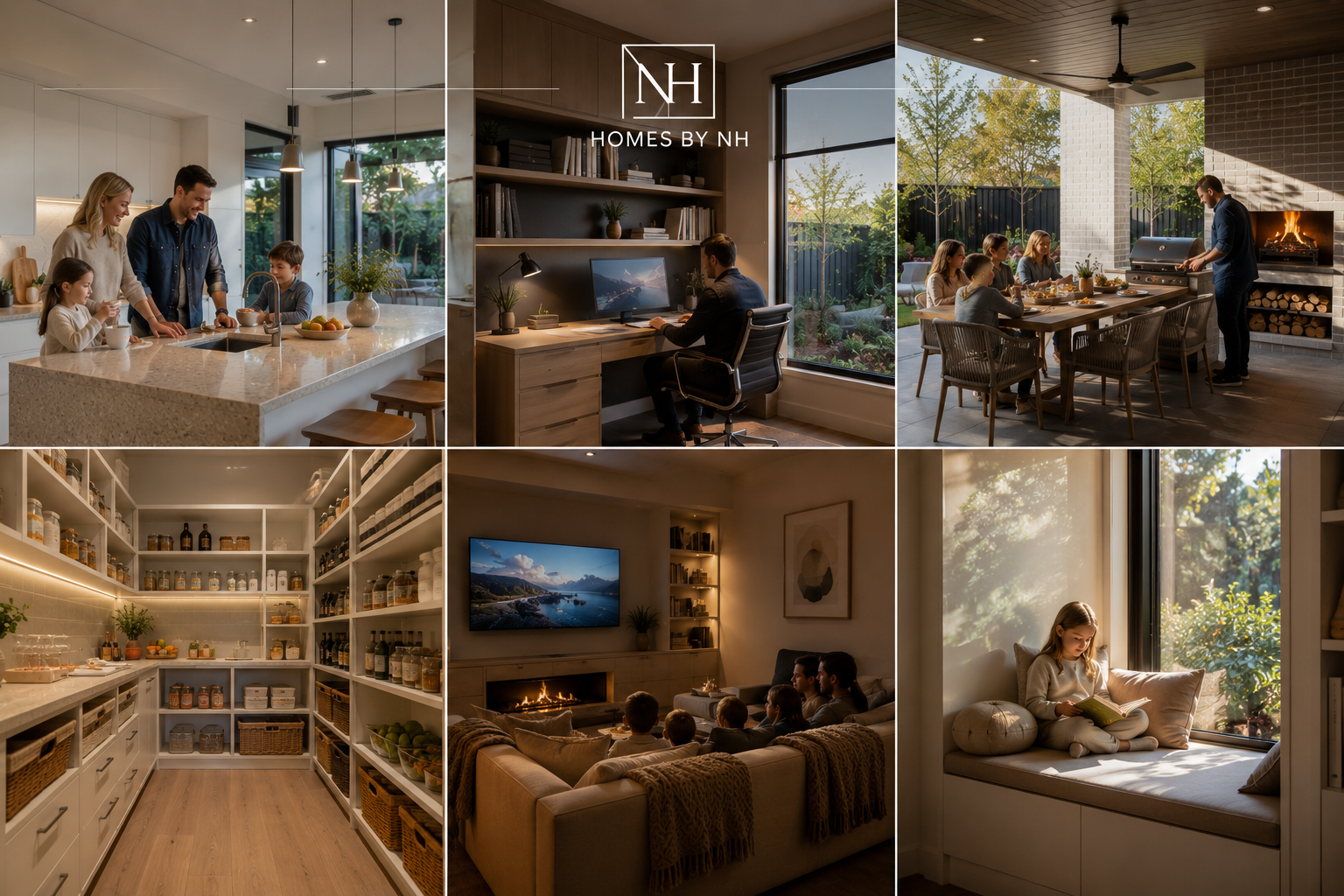
When people design a new home, it's natural to focus on the big-ticket spaces.
The kitchen.
The master bedroom.
The outdoor entertaining area.
The impressive living room that looks great in photos.
But something interesting happens after move-in day.
Families rarely talk about the rooms that looked best on a floor plan.
Instead, they talk about the spaces they use every single day.
The places where routines happen.
Where conversations happen.
Where memories quietly form over time.
Because the true value of a home isn't measured by square metres.
It's measured by how well it supports everyday life.
The Kitchen Is Still the Heart of the Home
There's a reason almost every family eventually gathers in the kitchen.
Not because it's the most expensive room.
But because life naturally happens there.
Breakfast before school.
Coffee before work.
Late-night conversations.
Birthday cakes.
Holiday meals.
Even in homes with large living areas, people often find themselves standing around the kitchen island talking.
The best kitchens aren't necessarily the largest.
They're the ones designed around how a family actually lives.
The Small Study That Becomes the Most Important Room
Many homeowners underestimate how valuable a dedicated study can be.
Especially today.
Remote work.
Online learning.
Running a business from home.
Managing household finances.
Video calls.
A room that seemed like an optional extra during planning can quickly become one of the most heavily used spaces in the entire home.
Interestingly, homeowners often say they regret not making this space larger—but rarely regret including it.
The Outdoor Space That Gets Used Every Weekend
Australia has a unique relationship with outdoor living.
Some of the most memorable family moments happen outside.
Weekend barbecues.
Summer dinners.
Children playing in the backyard.
Morning coffee in fresh air.
A well-designed outdoor area can effectively become another living room for much of the year.
And unlike many interior trends, outdoor spaces rarely go out of style.
The Walk-In Pantry Nobody Appreciates Until It's Full
When people tour display homes, walk-in pantries often seem like a luxury.
Then real life arrives.
Groceries.
Small appliances.
Lunch boxes.
Pet food.
Bulk shopping.
Suddenly, that pantry becomes one of the most practical spaces in the house.
It's not exciting.
It's not glamorous.
But it makes everyday life easier.
And that's often where real value is found.
The Living Room That Brings Everyone Together
Every family has a room where people naturally gather.
The room where:
movies are watched
stories are shared
guests are welcomed
children build blanket forts
parents finally relax after a long day
A great living room doesn't need to be enormous.
It simply needs to feel comfortable.
The most loved homes often have living spaces designed around connection rather than appearance.
The Mudroom That Saves Daily Frustration
This is one of the most overlooked spaces in modern homes.
Yet it can completely change daily routines.
Shoes.
School bags.
Sports equipment.
Jackets.
Keys.
Without a designated drop zone, these items often end up scattered throughout the house.
With one, the entire home feels more organised.
It's a small detail that makes a surprisingly big difference.
The Bedroom Isn't Just for Sleeping
The best bedrooms do more than provide a place to sleep.
They provide somewhere to retreat.
A quiet space at the end of a busy day.
A place to read.
Think.
Recharge.
Many homeowners eventually realise that comfort matters more than size.
Natural light.
Ventilation.
Privacy.
These factors often have a greater impact on enjoyment than extra floor area.
The Spaces Children Remember
Ask adults about the homes they grew up in.
Most won't remember the square metreage.
They'll remember:
The breakfast bench where they did homework.
The backyard where they played.
The hallway they raced down.
The reading corner they claimed as their own.
Children experience homes differently.
And often, the smallest spaces become the most meaningful.
Why the Most Valuable Rooms Aren't Always the Biggest
One of the most common misconceptions in home design is that bigger automatically means better.
But value isn't created by size alone.
It's created by usefulness.
A small room used every day often contributes more to family life than a large room that's rarely occupied.
Thoughtful design is about understanding how people live.
Not simply maximising floor area.
Great Homes Support Everyday Life
The best homes don't force families to adapt to the layout.
The layout adapts to the family.
That's why some homes continue feeling comfortable and functional years after construction.
Every room has a purpose.
Every space earns its place.
And the result is a home that quietly improves everyday life without demanding attention.
Final Thoughts
When people think about home value, they often focus on resale value.
Property value.
Market value.
But there's another type of value that's harder to measure.
The value of a kitchen that makes mornings easier.
The value of a study that supports your career.
The value of an outdoor area where family memories are created.
The value of a living room that brings people together.
These are the spaces that shape daily life.
And in many cases, they're the rooms homeowners appreciate most long after the excitement of move-in day has passed.
